
| Rating on the label | UV that gets through | How it’s described |
|---|---|---|
| UPF 15 | About 1/15th (under 7%) | The lowest rating that can be labelled sun protective |
| UPF 30 to 49 | About 1/30th to 1/49th (2 to 3.3%) | Very good |
| UPF 50+ | 1/50th or less (2% or under) | Excellent, the highest band |
| Plain white T-shirt | About 1/7th dry, about 1/3rd wet | Around UPF 7 dry and UPF 3 wet, according to the Skin Cancer Foundation |
UPF is not SPF
SPF is for sunscreen. It’s based on how long it takes UV-exposed skin to redden, and it measures UVB only. UPF is for fabric and counts both UVA and UVB. Sunscreen also has to be put on thickly and put on again. A fabric doesn’t wear off through the afternoon or wash off in the water.
Why swimwear is the hard case
Swimwear gets wet and it stretches, and both can let more UV through. That’s why the plain T-shirt in the table drops to about UPF 3 once it’s wet. Swimwear with a UPF rating is made from tighter, denser fabric, and under the US standard the fabric is laundered, soaked in chlorinated water and exposed to simulated sunlight before it’s measured.
What to look for in UPF 50+ swimwear
- The number. UPF 50+ is the highest band. The Skin Cancer Foundation asks for UPF 50 before it will recommend a fabric.
- Coverage. The rating applies only where there’s fabric. Sleeves, a high back and a longer leg or skirt cover the places that burn first.
- Fit. A piece that strains at the seams is stretching, and stretched fabric lets more UV through. Take the size that sits close without pulling.
- Color and weave. Dark or bright colors and dense fabric block more than pale, thin or loosely woven cloth.
- Care. Rinse after the pool or the sea and follow the care label, so the fabric keeps its shape.
Your face, neck, hands and feet still need sunscreen, a hat and shade. Read how clothing and sunscreen compare.
SunSkyns and UPF 50+
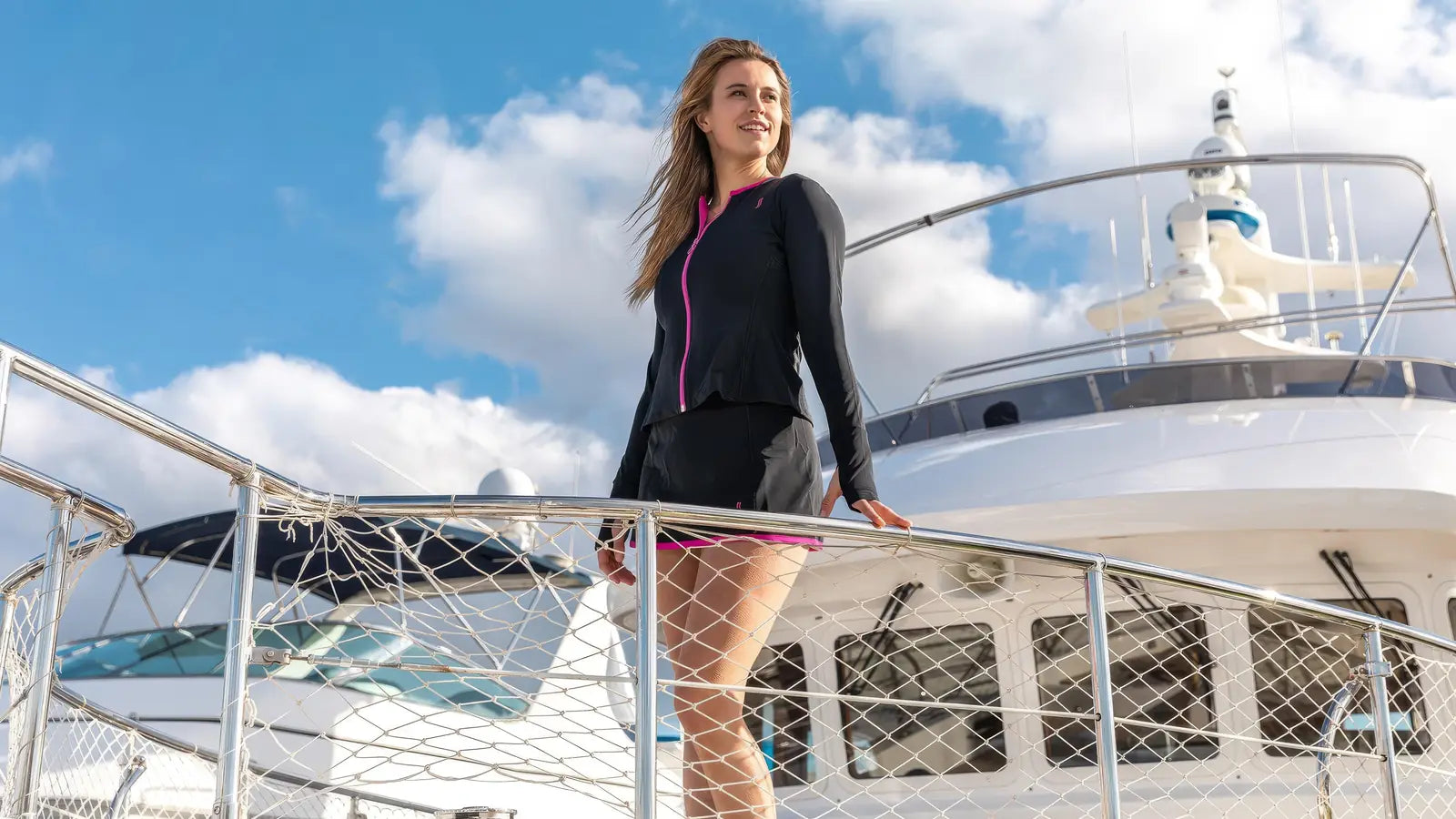
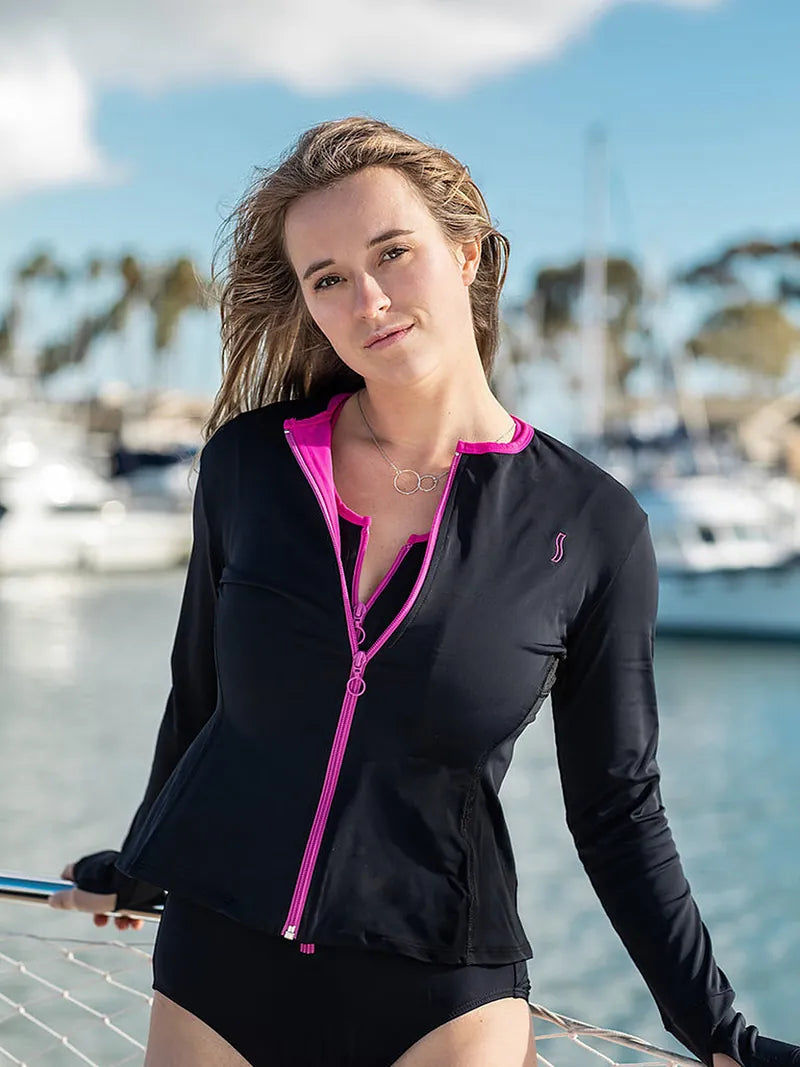
SunSkyns makes three pieces in a lightweight UPF 50+ compression fabric: the Swim Suit ($150), the Swim Jacket ($165) and the Swim Skirt ($85). They’re black with turquoise or magenta trim, in sizes XS (US 0-2) to XL (US 16-18), and they’re made in the USA.
Worn together they cover the back up to the neck, the arms down over the hands, and the upper thigh. Shop the pieces or check your size.
What does UPF 50+ mean?
UPF 50+ means the fabric lets through one fiftieth or less of the sun’s UV, so it blocks about 98 percent or more. It’s the highest rating band for sun protective clothing and covers both UVA and UVB.
Is UPF 50+ better than SPF 50?
They measure different things. SPF is for sunscreen and measures UVB only. UPF is for fabric and measures UVA and UVB. Fabric also doesn’t need putting on again every two hours, but it only protects the skin it covers.
Does UPF swimwear still work when it’s wet?
Wet or stretched fabric can let more UV through, which is why ordinary clothes protect poorly in the water. Rated swimwear uses denser fabric, and a size that fits without straining keeps it working as intended.
Do I still need sunscreen with UPF 50+ swimwear?
Yes, on everything the swimwear leaves uncovered: face, neck, hands, lower legs and feet.
Sources
- The Skin Cancer Foundation. Sun-Protective Clothing.
- ASTM International. D6544, Standard Practice for Preparation of Textiles Prior to Ultraviolet (UV) Transmission Testing.
A note on skin
This guide is general information, not medical advice. For anything about your own skin, ask your dermatologist. For anything about fit or sizing, ask us.


